
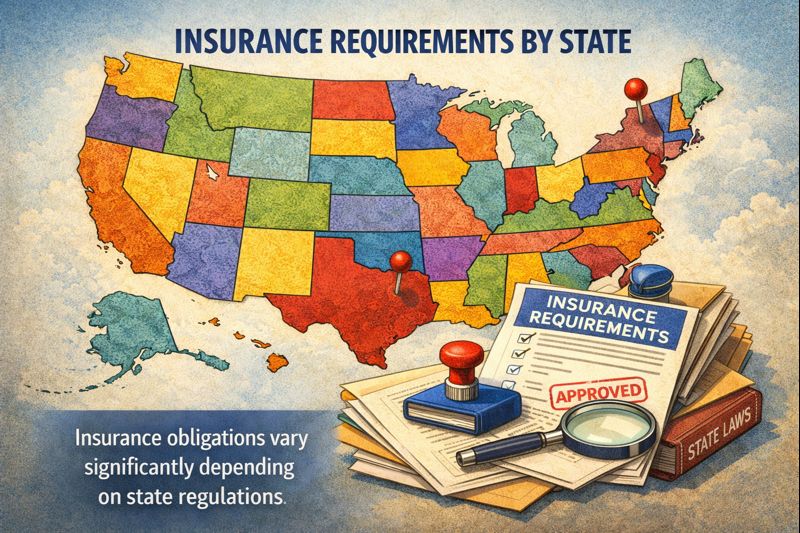

SR-22 Insurance Requirements by State: A Regulatory Breakdown
SR-22 insurance is governed primarily at the state level, making SR-22 insurance requirements by state one of the most complex aspects for drivers to navigate. While the core purpose of SR-22 insurance—proving financial responsibility—remains consistent, implementation varies widely.
Most states require SR-22 insurance following serious violations such as DUI, driving uninsured, or license suspension. The requirement typically includes both minimum liability coverage and an official SR-22 filing submitted directly by the insurer to the state’s Department of Motor Vehicles (DMV).
For example, California mandates SR-22 filings for DUI offenders for up to three years, while Florida may require longer compliance for repeat offenses. Texas, by contrast, emphasizes higher liability limits for SR-22 filers.
Key elements that differ by state include:
-
Minimum bodily injury and property damage limits
-
Duration of SR-22 filing requirement
-
Accepted insurers authorized to file SR-22 forms
-
Penalties for SR-22 policy cancellation
Failure to maintain continuous SR-22 insurance often results in immediate license re-suspension, fines, or extended compliance periods. This makes understanding state-specific SR-22 insurance rules essential.
Some states allow non-owner SR-22 policies, while others restrict eligibility. Additionally, filing fees and reinstatement costs vary and are often separate from insurance premiums.
Drivers relocating between states must also re-file SR-22 insurance under the new jurisdiction, as SR-22 compliance does not automatically transfer.
In summary, SR-22 insurance requirements by state demand careful attention to local law. Consulting state DMV guidelines and SR-22-specialized insurers ensures legal compliance and avoids costly administrative errors.
