What Is an SR-22? The Complete Filing Guide for High-Risk Drivers
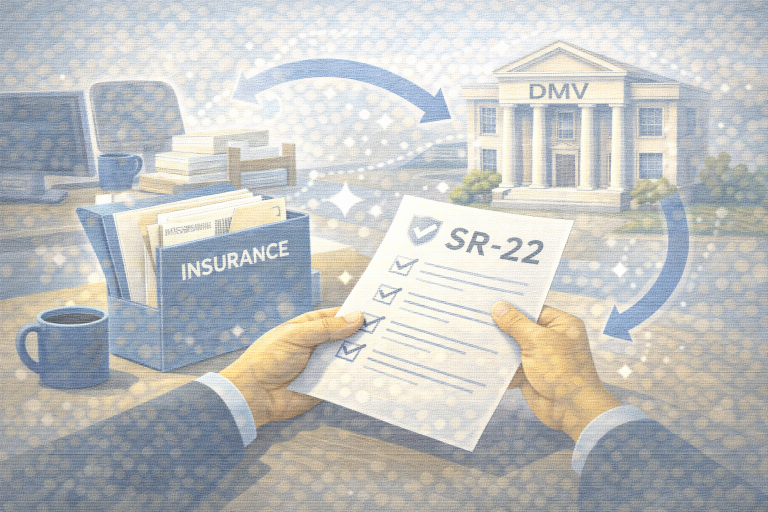
An SR-22 is not insurance — it is a certificate your insurer files with the state proving your policy meets minimum liability requirements after a serious violation. Confusing the two is why people overpay. This guide covers who needs one, the process, and the cheapest legal path.
Who Typically Gets Ordered to File
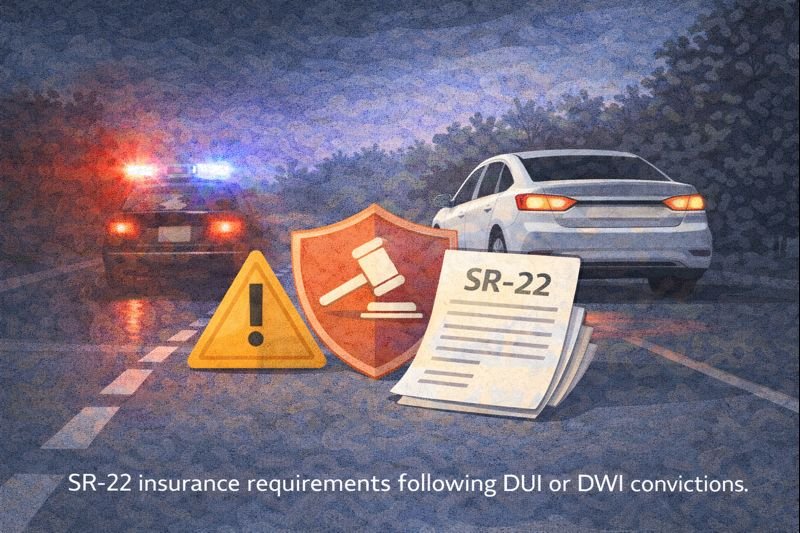
States order SR-22s after DUI/DWI convictions, driving without insurance, at-fault accidents while uninsured, repeated minor violations adding up to suspension points, and license reinstatements after suspensions. The DMV tells you — the requirement arrives as a reinstatement condition.
The Mechanics: How Filing Works
You buy a liability policy from an insurer authorized to file SR-22s in your state; the insurer transmits the certificate electronically, usually within days. If the policy lapses — even one day — the insurer must notify the state, and your license is suspended again immediately.
- The SR-22 follows the policy, not the car (unless non-owner)
- Continuous coverage is the whole game: lapses reset the clock
- Moving states mid-filing does not end the duty — file in the new state until the original state clears you
What It Costs
The filing fee itself is small: $15–50 one-time in most states. The real cost is the rate increase your violation history triggers — commonly 40–80% above a clean record for the same limits. Our rate board tracks typical post-SR-22 pricing by carrier.
The Cheap-Legal Path
Shop specifically among SR-22-active carriers (they price high-risk drivers differently), match limits to exactly your state minimums during the filing period, and consider a non-owner policy if you do not own a car. When the mandated period ends, request the SR-22 removal — do not just let the policy run.
Frequently Asked Questions
Can I get SR-22 insurance without a car?
Yes — a non-owner SR-22 policy satisfies the filing when you drive borrowed or rented vehicles.
How long do filings last?
Commonly three years from the reinstatement date, but durations vary by state and offense — check your state file.
Does an SR-22 hurt my credit?
No. Insurance filings do not appear on credit reports.
The filing is paperwork; the discipline is the product
Buy the right policy, never lapse, and the SR-22 becomes a three-year timer instead of a career sentence.
Keep reading: Filing types · State rules · Rate board