SR-22 and Moving to a New State: What Happens to Your Filing
Moving states with an active SR-22 is a compliance minefield: the old state wants its filing, the new state wants its own proof, and insurers differ in whether they even write SR-22s in both places. Do this in the right order and the move is invisible to your requirement; do it wrong and you restart the clock.
The Golden Rule
Your original state’s requirement does not disappear because you moved. The standard practice: maintain the original state’s SR-22 filing — through a carrier licensed there — while also meeting the new state’s insurance requirements. Most insurers can hold both simultaneously with updated addresses.
The Correct Order of Operations
- Before the move: confirm your current carrier is licensed in the destination state; if not, line up a new carrier now.
- Move day window: update license and registration per the new state’s deadlines (usually 30–90 days).
- Insurance first, then DMV: refile with new address details before changing license — the DMV checks coverage electronically.
- Confirm both filings: get written confirmation the original state’s SR-22 remains active post-update.
- Never cancel: the original filing stays until its full duration ends, regardless of residence.
State-Pair Quirks
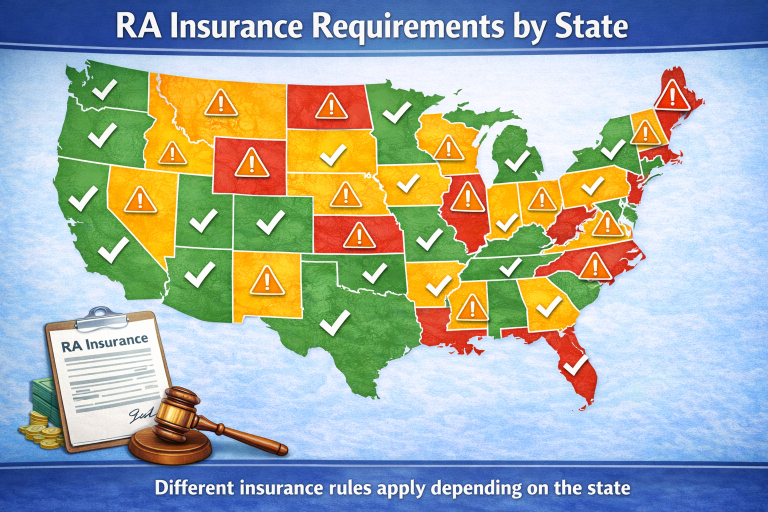
Florida and Virginia FR-44 requirements follow you with higher liability limits than most SR-22 states — a plain SR-22 policy won’t satisfy them. States without SR-22 systems still expect proof of the original requirement’s continuity. The state files mark each state’s stance, and the moving checklist sequences the calls.
The filing follows the driver, not the address. Every state you live in during the duration sees the same requirement until it completes.
Can I switch carriers when I move?
Yes — same-day handoff of filings; overlap by a day to be safe.
Does the new state add its own SR-22 requirement?
Only if you commit a new qualifying offense there; moving alone doesn’t.
What if my insurer isn’t licensed in the new state?
That’s a before-the-move problem — switch carriers with a coordinated filing transfer, not after you’ve moved.
Related reading: State files · Moving checklist · Carrier licensing